
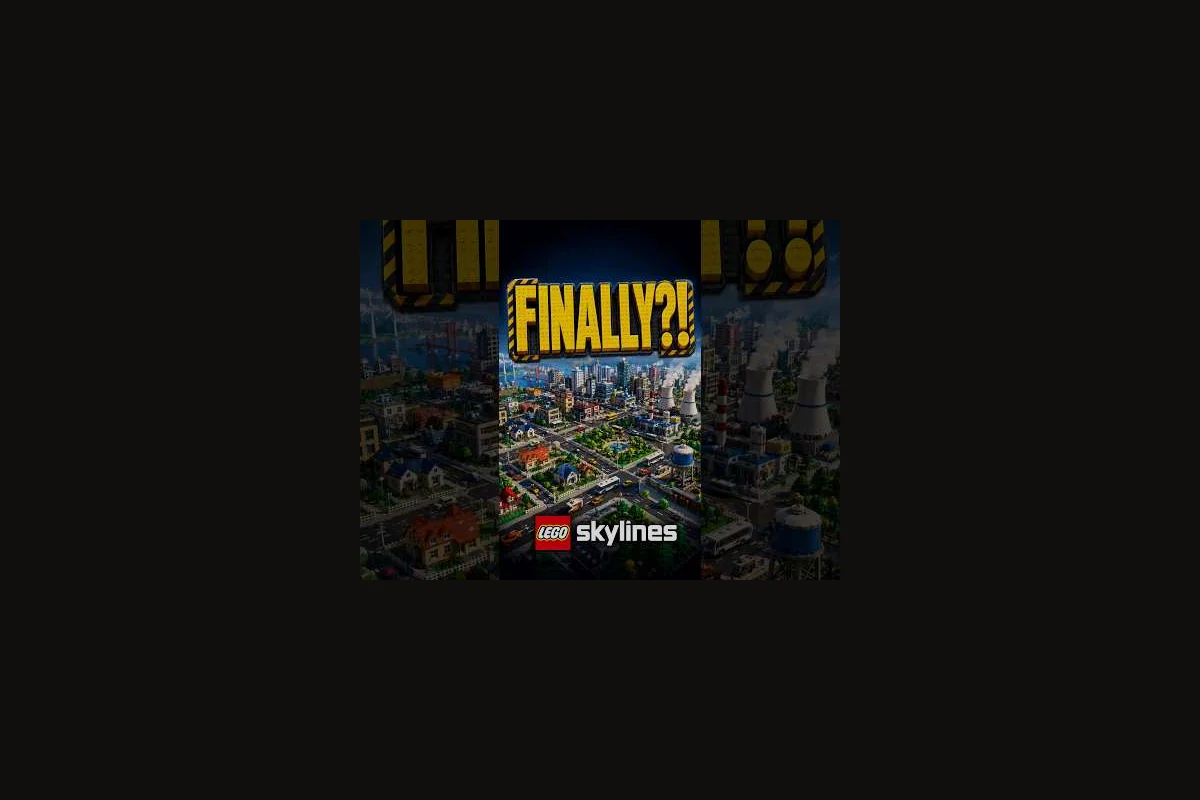
Theming a LEGO Skylines custom city starts with how you decorate, not how many bricks you place. The official Steam page confirms the game ships with a "large catalogue of buildings and decorations" dedicated to personalizing your city, which means the visual layer is treated as a first-class system, not an afterthought. If you treat LEGO Skylines decoration tips as a district-planning exercise instead of a brick-spelunking session, your themed building styles will read clearly even before any service coverage is dialed in. This guide walks through how to use LEGO Skylines city themes as a planning lens for parks, shops, and homes so the whole map tells one coherent story.
Decoration as a Planning Layer in LEGO Skylines
Decoration in LEGO Skylines is not just a vanity pass at the end of a build. According to community impressions of the announcement trailer and the official Paradox Interactive product page, the game positions customization as a core creative loop alongside electricity, food, water, and waste collection. That positioning matters because it tells you the developers expect players to swap facades, recolor walls, and arrange props as part of the regular build cycle, not as a post-game trophy project.
Why a Custom City Needs a Theme First
A LEGO Skylines custom city without a theme ends up looking like a parts catalog rather than a place. A theme gives every district a reason to exist and a constraint that makes decoration decisions faster. With a defined palette of colors, rooflines, and props, you stop asking "which brick goes here" and start asking "does this brick belong in this district." That shift is the difference between a sprawling sandbox and a believable LEGO Skylines city aesthetic.
| Theme Anchor | Visual Signal | Districts That Use It |
|---|---|---|
| Coastal Brick | Blue roofs, white walls, sand-colored paths | Seaside homes, boardwalk shops, marina parks |
| Old Town Cobble | Brownstones, slanted roofs, lamp posts | Dense home blocks, bakeries, town squares |
| Modern Modular | Flat roofs, glass panels, neon props | Office workplaces, tech shops, transit hubs |
| Garden Suburb | Green roofs, hedges, pastel walls | Family homes, community parks, small grocers |
Decoration, Then Services, Then Coverage
Community testers who played the announcement trailer demo runs reported that laying decoration before placing service buildings produced tighter, more believable districts. The reason is practical: a park, a fountain, or a sidewalk already implies where clinics, fire coverage, and shops should sit. If you wire services first, decoration becomes filler around infrastructure; if you decorate first, services become supporting characters in a scene you have already authored. For most LEGO Skylines decoration tips, this ordering is the single highest-leverage habit to build.
Building Styles That Anchor Each District
Building styles in LEGO Skylines are the second decorative layer after color, and they do the heavy lifting when a district has to be readable from a distance. The LEGO Skylines on Steam page lists a deep catalogue of buildings and decorations, but the trick is not the count, it is the consistency of roofline, footprint, and facade rhythm across a block.
Choosing a Style Per District Type
A district style should match its job. A home district benefits from low-rise, repetitive footprints so the eye reads "residential" without checking zone colors. A commercial district benefits from varied, taller facades so the eye reads "shopping street." A workplace district benefits from uniform blocks with shared props so the eye reads "office park." This is the kind of LEGO Skylines building styles thinking that turns a generic city into a LEGO Skylines custom city with character.
Three Style Rules That Travel Well
Across every tested community layout, three style rules showed up again and again. First, repeat one motif per block: if you choose awnings for shops, every shop in the district uses awnings. Second, cap your roofline variety to two heights per block: ground floor plus one residential or commercial story. Third, leave breathing room: decoration reads better when a few signature props are scattered with intent instead of every available brick placed. The LEGO Skylines announcement trailer shows exactly this restraint in its on-screen city shots, with clearly grouped buildings rather than chaotic part piles.
City Themes: Color, Prop, and Floor Palettes
LEGO Skylines city themes are usually described as "color" choices, but the system actually runs on three independent palettes: wall color, prop color, and floor pattern. Treating them as one knob is the most common mistake new players make, and it is the reason their themes look muddy once they zoom out.
The Three-Palette Framework
A clean theme sets one wall palette per district, one accent palette for props and signs, and one floor palette that ties the streets together. If you change all three at once, every block competes with every other block. If you lock the floor palette city-wide and only vary wall and prop palettes per district, the streets feel unified while the districts stay distinct. Players who shared early-build screenshots on community threads consistently credited this approach for their most readable maps.
| Palette | Scope | Recommended Locking |
|---|---|---|
| Wall Palette | Per district | 3-4 colors maximum |
| Prop Palette | Per district | 1-2 accent colors |
| Floor Palette | City-wide | 1-2 path patterns |
Translating Real-World References
One of the easiest ways to lock a theme is to start from a real-world reference. Pick a neighborhood, a postcard, or a film set, then break it into its three palettes and a prop vocabulary. A Nordic harbor town becomes blue-white walls, gray cobble, and lamp posts with red awnings. A desert marketplace becomes sand walls, terracotta roofs, and palm props. A mountain ski village becomes white-and-wood walls, gray slate paths, and pine props with chimney stacks. Each of these translates cleanly into LEGO Skylines city themes because the prop vocabulary is finite and reusable.
Park Design as the Visual Glue
Parks in LEGO Skylines are not just greenery or happiness boosts. According to the official Paradox Interactive product page, parks are listed alongside housing, jobs, and shops as one of the core management responsibilities, which means they carry both gameplay weight and visual weight. A well-placed park is the cheapest way to glue two districts together that would otherwise feel like separate maps stitched at a seam.
Park Design Patterns That Work
The strongest LEGO Skylines park design patterns borrow from real urbanism. A linear park between two districts works as a soft border and a pedestrian shortcut. A central square park in a home block works as a meeting point and a visual focal point. A waterfront park along a river or coast works as a long, prop-dense ribbon that ties multiple districts to the same water feature. Each pattern gives your decoration a job to do, which is what separates a LEGO Skylines custom city from a parts display.
Park Props and Focal Pieces
A park needs one focal piece, a path network, and a small set of supporting props. The focal piece is the visual anchor: a fountain, a statue, a large tree, or a custom build. The path network is the connective tissue: it should match the city's locked floor palette so the park feels like part of the urban fabric. The supporting props are benches, lamps, small trees, and planters; the rule of thumb from community testers is to keep prop variety under five per park so the focal piece still dominates.
Shop Design and Commercial Frontage
Shops are the loudest decoration opportunity in any LEGO Skylines city because their facades, signs, and awnings are the most visible part of the map. They are also the district that suffers fastest from inconsistent LEGO Skylines shop design, because one mismatched awning color can break the read of an entire block.
Three Shop Facade Templates
Most successful commercial districts in early community screenshots use one of three facade templates: row shops with shared awnings, corner shops with twin facades, or anchor shops with a single large storefront. The row template works for main streets and works best when every shop shares a wall color and an awning color. The corner template works for intersections and benefits from a slightly taller roofline so it reads as a landmark. The anchor template works for plazas and works best when paired with a park or a transit stop, because the prop density around an anchor shop justifies the extra visual weight.
| Shop Type | Footprint | Best District | Signature Prop |
|---|---|---|---|
| Row Shop | Narrow, repeats 4-8 times | Main street, market lane | Shared awning |
| Corner Shop | Medium, two facades | Intersection, plaza edge | Twin signage |
| Anchor Shop | Wide, single facade | Plaza, transit stop | Large sign or statue |
Shop Design and the Service Loop
Shops need customers to stay open, and customers come from homes and workplaces. That means a shop district that looks beautiful but sits next to an empty residential block will read as abandoned within a few in-game weeks. The most reliable LEGO Skylines shop design approach is to place a row of shops within walking distance of a home block, then connect both with a park or a path. The decoration and the service loop reinforce each other, which is what the official product description means when it lists parks, shops, and housing together as interconnected responsibilities.
Home Design and Residential Blocks
Homes are the most numerous building type in any LEGO Skylines custom city, which is why their decoration choices have outsized impact. A single mismatched roof color repeated fifty times will dominate the entire map view, while a consistent residential roofline will make the city look finished even with very few props.
Home Design Templates That Scale
LEGO Skylines home design works best when each residential district uses one of three templates: detached homes with front yards, townhouses with shared walls, or apartment blocks with balconies. The detached template needs generous space and a low building density, which makes it ideal for suburbs and outer rings. The townhouse template is the workhorse of mid-density blocks and benefits from a shared wall color and a row of consistent rooflines. The apartment template is the high-density choice and works best when paired with a park or a transit stop because of the higher service demand.
Roof, Wall, and Yard as One System
The most common home design mistake is treating roof, wall, and yard as separate choices. They are a single system. A pastel wall with a dark roof and a hedge-lined yard reads as a garden suburb. A brick wall with a slate roof and a small front stoop reads as an old town. A white wall with a flat roof and a balcony reads as a modern block. Picking all three at once, instead of picking one and then matching the other two, is the fastest path to a coherent LEGO Skylines home design system.
| Home Template | Density | Yard Treatment | Best Roofline |
|---|---|---|---|
| Detached Home | Low | Front lawn, hedge, tree | Pitched, single height |
| Townhouse | Medium | Shared stoop, planter | Pitched, row-matched |
| Apartment Block | High | Balcony, shared green | Flat, uniform |
Tying Districts Together With a Visual Spine
A LEGO Skylines custom city with great individual districts can still feel fragmented if there is no visual spine connecting them. The spine is usually a path, a waterfront, a wall, or a row of trees that runs through the whole map and ties every district to the same color or prop vocabulary.
Four Spine Types Worth Trying
The most common spines in community builds are waterfronts, boulevards, rail corridors, and greenways. A waterfront spine works when your map has a coast or river and ties parks, shops, and homes along the same edge. A boulevard spine works when you want a main avenue that connects a residential ring to a commercial core. A rail corridor spine works when you want a hard visual divider between two halves of the city. A greenway spine works when you want a soft pedestrian connector between suburban and urban districts.
Spines and Themed Building Styles
A spine only reads as a spine if its decoration matches the districts it passes through. If a boulevard uses the modern modular palette and then crosses into an old town cobble district without a transition, the map will feel like two separate projects. The cleanest approach is to keep the spine's floor palette constant, allow its prop palette to shift gently between districts, and place a transition block at every district boundary. This is the kind of detail that separates an intermediate LEGO Skylines decoration tips build from an advanced one, and it ties directly into the LEGO Skylines building guide which covers broader building placement logic.
Decoration Tips and Common Pitfalls
Once the system is in place, the remaining work is mostly about restraint. The most reliable LEGO Skylines decoration tips from early community testing focus on what to avoid as much as what to place, because the catalogue of parts is large and the temptation to fill every gap is strong.
Five Pitfalls to Avoid
The first pitfall is mixing more than three palettes per district. The second is using too many unique props per block, which makes the scene feel busy rather than themed. The third is ignoring floor patterns, which leaves the street layer feeling disconnected from the buildings. The fourth is decorating services and residences with the same vocabulary, which makes fire stations look like homes and homes look like fire stations. The fifth is skipping the breathing space between signature props, which makes the map feel crowded even when every individual brick is well placed.
Five Habits That Compound
The first habit is to lock the floor palette city-wide before placing a single building. The second is to design each district's wall palette from a real reference, not from scratch. The third is to place one focal prop per park and one per anchor shop, then stop. The fourth is to match the roofline of every home in a block to two heights maximum. The fifth is to walk the camera through the city at street level after every major addition, because street-level reads catch inconsistencies that a top-down view hides. These five habits, applied together, are what most community testers credit for their most readable LEGO Skylines city themes.
Advanced Theming: Mixing Two Themes Without Chaos
A common question in community discussions is whether a LEGO Skylines custom city can support two themes without looking messy. The answer is yes, but only with a clear seam and a transition block. A transition block is a short row of buildings that use props from both themes, with a wall color that bridges the two palettes. Without a transition block, two themes on one map feel like a glitch; with a transition block, they feel like two neighborhoods of the same city.
Where to Place the Transition Block
The transition block should sit at the natural boundary between two districts, usually at a major road, a waterfront, or a park edge. The transition buildings should keep the city's locked floor palette and the city's locked prop accent, and only the wall color and the secondary prop vocabulary should shift. This is a small adjustment, but it is the single biggest difference between a two-theme map that feels coherent and one that feels like two separate saves merged at a save file boundary.
Frequently Asked Questions
What is the fastest way to start a themed custom city in LEGO Skylines?
Lock your floor palette city-wide first, then pick one district and design its wall and prop palettes from a real reference like a postcard or film set. With LEGO Skylines shipping a large decoration catalogue, a palette plan prevents endless scrolling, and that single template carries across parks, shops, and homes.
How many building styles should a single district use?
One primary style plus one accent style is the cleanest read. Mixing more than two styles per block tends to make the district feel unfocused, even if every individual building looks fine. The accent style usually shows up at corners, anchor shops, and focal parks, while the primary style fills the rest of the block.
Can parks connect two different LEGO Skylines city themes?
Yes, parks work well as connectors because their props and paths can borrow from both themes. Keep the park's floor palette locked to your city-wide color scheme while mixing prop vocabulary from each side, so the linear park bridges an old town district and a modern modular district without breaking the visual spine.
How do I keep home design consistent across a large residential block?
Pick one home template per block, match every roof to two heights maximum, and lock the wall color to three shades. Then place yards and props using one accent color shared by the whole block. This approach scales because you can repeat the same template across many blocks with only the wall color changing between districts.
Where do shop design and home design meet in a real layout?
Shops and homes meet at the edges of residential blocks, usually along a main road or a boulevard spine. A well-placed row of shops within walking distance of a townhouse block will keep both visually and economically healthy. For the customer-and-service loop behind that placement, the LEGO Skylines income guide is the deeper read.